Fractured

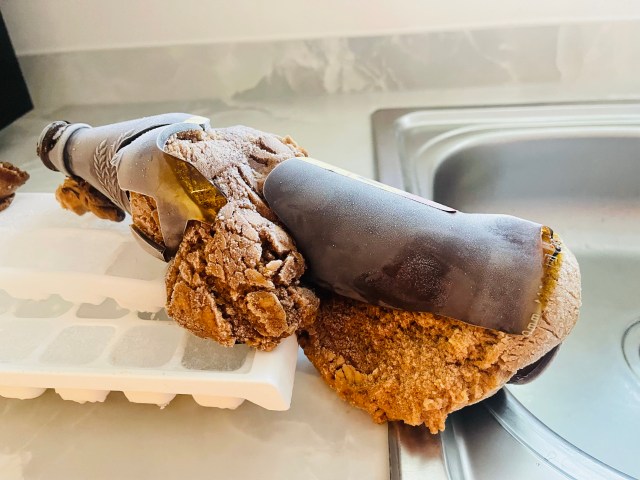
You may be wondering what in heaven’s name that is. Well, it’s a long story, but I’ll keep it short. During one of the last five heatwaves that hit this glorious island (the UK, to those of you wondering) this summer, I was parched, my tongue practically cleaving to my throat. I decided to put this brownish-gold liquid into the freezer, hoping to take that chilled goodness into my throat. But I am a wonderful mum, and my daughter had just gotten her first job, so I asked her a question, and here goes our conversation:

“Hey dear, would you take this Malt to work?” She gave the Malt and me a quick glance and shook her dainty head.

“No, but thanks for offering,” she said, and left for work.

No, I got the story wrong – sorry! I asked her first, then put the drink in the freezer, and promptly forgot all about it. When I remembered, it was late evening, and the deed was already done! The drink had exploded. Curious me wanted to know how it happened. So I decided to write this post and tell you all about it. I will be equating this sad-looking, bloated, and poor drink with our world now. The most significant thing that happened was discovering what turned a perfectly drinkable Malta Guinness into a solid, tangled mess, a bit like our world right now.
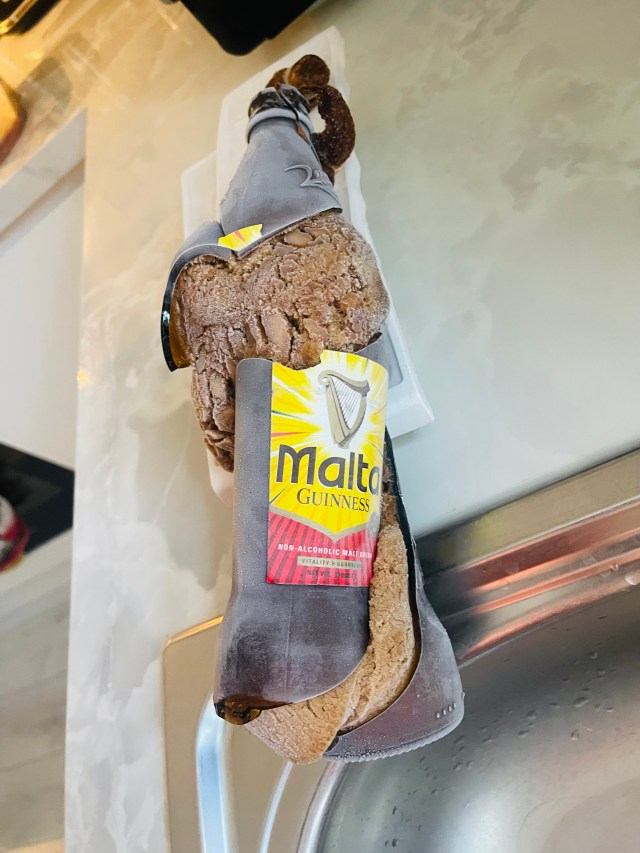
That wasn’t the end of the palaver. I was drawn to the solid golden mess, and the little girl in me, over 50 years old, stretched out her hand. You probably guessed what happened, or maybe not. Anyway, I touched the solid gold, and a tiny bit of it went into my mouth. Well, fragments of broken glass travelled to my mouth as well and pierced my upper palate. I quickly spat it out, along with the blood. Well, maybe I still have shards of glass embedded somewhere in my throat, but this taught me a lesson – curiosity kills the cat. Thank God Almighty, I didn’t die!

The Baying of the Mob

The whole process is just like our world now. Earlier that afternoon, I listened to an interview James Baldwin gave years ago, where he lamented that “love has never been a popular movement”. So true, we need to start a love movement! Which brings me to how the late Cambridge Professor Jason Arday was hounded to death by continuous, unrelenting reporting about his alleged “plagiarism”, “lies”, and ceaseless scrutiny of his private life; his former university cleared him, by the way. Like the Malta Guinness above, he couldn’t cope with the stress and sensory overload. He left this wicked, loveless and unfair world.

Watching the news of his death unfold was heart-wrenching. Was he the first professor suspected of plagiarism at Cambridge? No, so why didn’t we hear about other academics like that? Your guess is as good as mine. Should academics be thoroughly investigated? By all means, but isn’t that the university’s job? Several factors contributed to his death. I am a PhD researcher, so I understand how research should be rooted in data and integrity, but the way the mob, so-called journalists, salivated and wrote about his case, you would think that finally the Epstein file has been released or aliens were actually discovered living amongst us. Even after his death, the hatred continued. Insidious jokes about his life, people hiding their own sorrow and shame found it easy to heap insults on him, mock him, and I wonder how many of those people who wrote and debated his integrity would survive such intense scrutiny; I bet not many?

And the guy who started the furore. I wouldn’t dignify him with a mention, but last I heard, he’s back at his job after a brief suspension. And yesterday, I heard he’s been given a room at Oriel College, Oxford, to discuss DEI hires. That was a true story. Another Oxford academic was accused of having child sex images. Was her name plastered all over newspapers? No. The unfairness of the world, you might say. A lot of questions are going through my mind. Why would the University of Oxford platform a man in the middle of the mess that took a man’s life? But what goes round comes round. I sincerely pray that we’d find it in our hearts to love truly, and be kinder to others less fortunate than us.

Note: I wrote this article several weeks ago; it’s now November, and Christmas is fast approaching. We honestly need to look at ourselves in the mirror and ask, “What is my purpose in this world? Am I only here just to live for myself or make my corner of the world a better place?” Share your thoughts in the comments below.

Wherever you are in the world, spread joy and love, and stay safe. And if you’re not in the right place right now, don’t worry; things will get better!

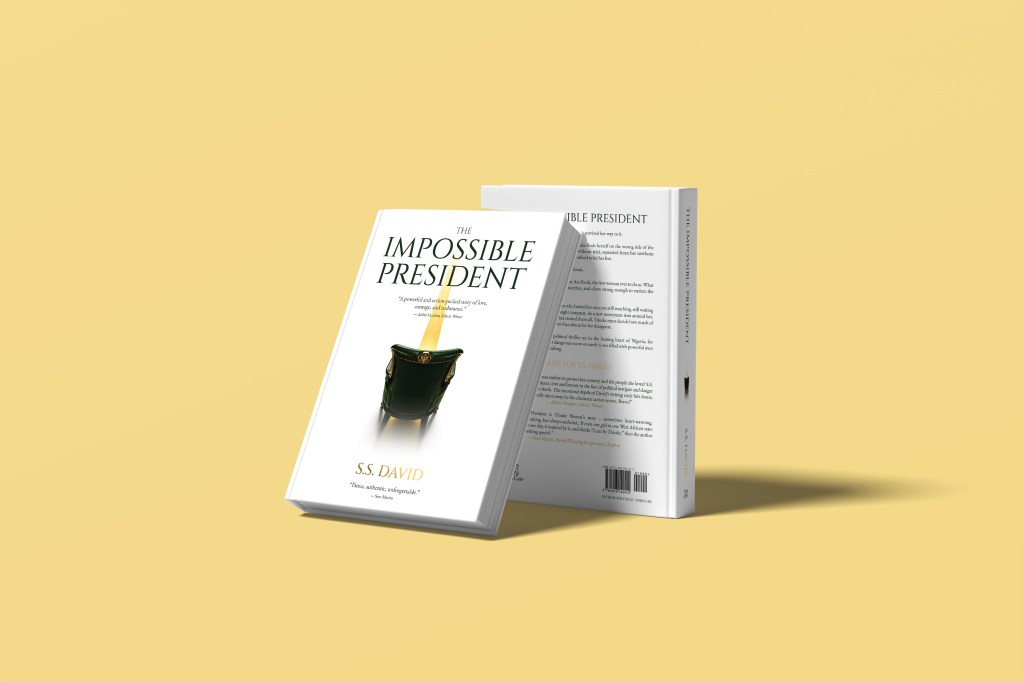
And you can get a copy of my latest book wherever books are sold, and if you want, there are PDF copies available; click on this link to get The Impossible President PDF copy.
Much love, always! 🙂
Four Days Until The Impossible President.

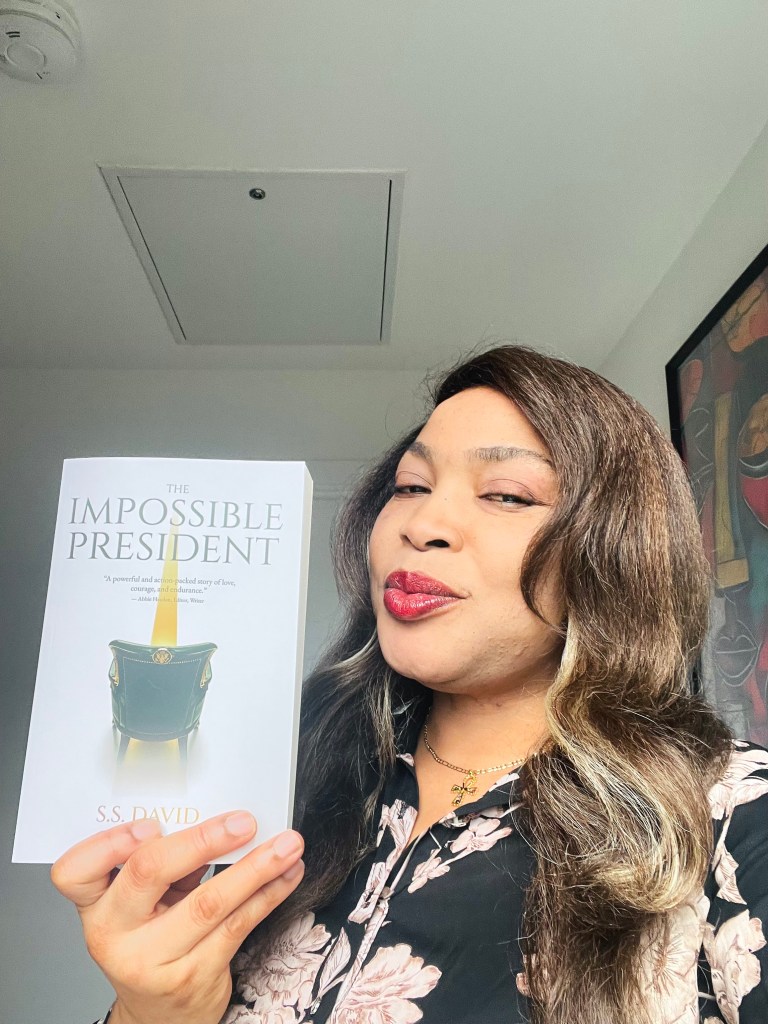
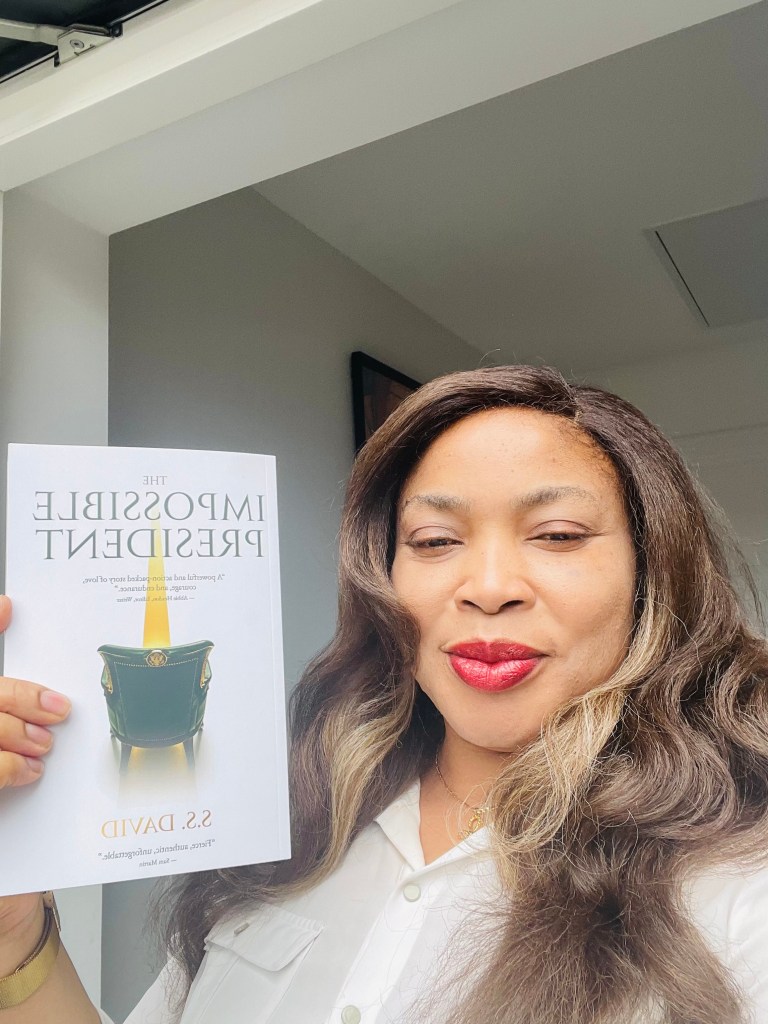
Posing with The Impossible President today. I took the picture myself, so the title looks the way it does! 🙂

I haven’t posted here for a while, partly because life has been unusually busy. Between work, publishing, and my PhD research, the months seem to have folded into one another and disappeared before I had noticed. Oct 14th was also my birthday, which made me reflective, as birthdays tend to do.

The older I get, the less interested I am in chasing time and the more I value using it well. None of us knows how much time we have left. What matters, I think, is what we choose to do with it; the questions we consider worth asking, the work we commit to, and the things we leave behind when the projects are finished, and the noise has gone, replaced by a poignant silence.

That thought feels especially relevant this week, as Arrow Gate Publishing will release a new edition of The Impossible President on Tuesday 20 October. The novel was first published in Nigeria in 2002 and republished in Abuja in 2004. More than two decades later, it is finally being published for readers in the United Kingdom and internationally.

Yes, I’m writing it twice now. The Impossible President comes out on Tuesday, 20 October. I’m excited, and a little emotional, if I’m honest. Twenty-four years ago, I wrote this book in Nigeria. Next week it will be published in the country where I now live, love, teach and conduct my research. As someone whose life has been shaped by both Nigeria and Britain, I find myself thinking about that journey more than I expected.

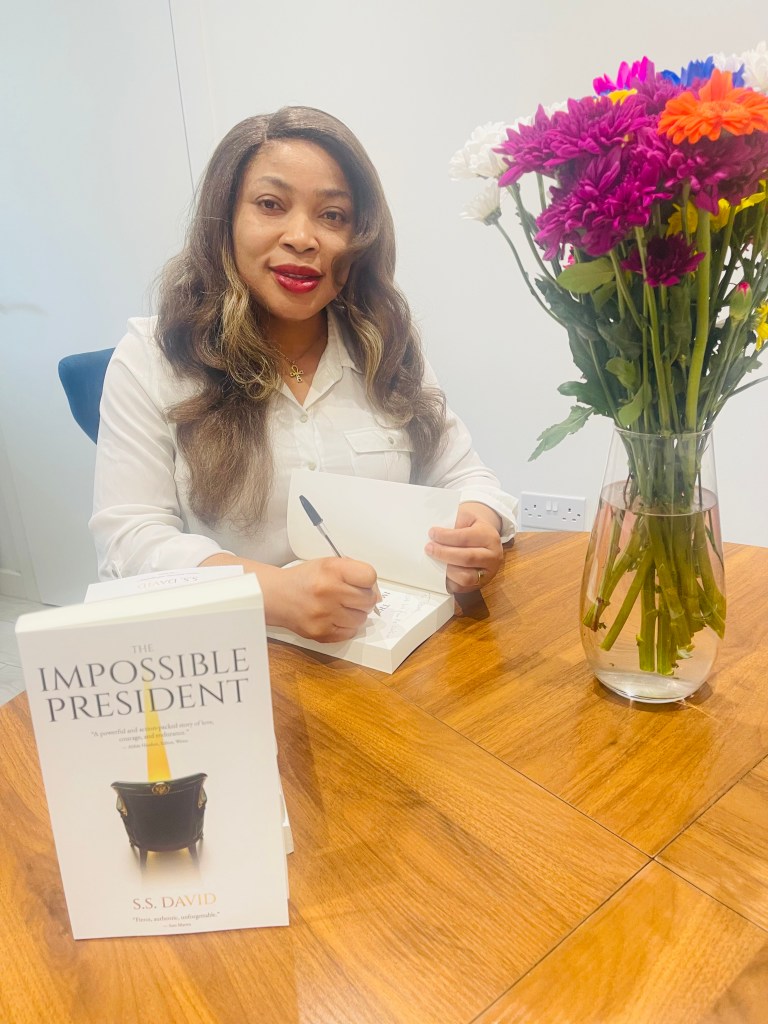
Signing the early readers’ review today. Already posted!

I have lived with this book for a long time. It has a story behind it, and it’s linked to my PhD research. Perhaps that is why seeing it take on a new life feels different from publishing something entirely new. A new book arrives with possibility. An older book returns, carrying its history. It reminds you where you were when you wrote it, what concerned you then, and which questions seemed important enough to spend years on.

The question at the centre of The Impossible President was simple – what would it take for a woman to become president of Nigeria? And I’m not talking about it in theory, or symbolically, or because a speechwriter thought it would make a good campaign slogan.

What would it actually take?

Nigeria celebrated sixty-six years of independence on 1 October. Over those sixty-six years, no woman has served as president or vice president. That fact stayed with me when I first wrote the novel and still does today. I once asked my mum why, and she gave a short laugh and said, “Men are always afraid of a strong woman.” What she said was debatable, but it may have some truth.

This brings me to this year’s Black History Month theme in the United Kingdom: Honouring Our Communities. I have repeatedly returned to the relationship between history and visibility. Communities are not built by famous people alone. They are sustained by countless others whose names seldom appear in public records. Teachers, campaigners, carers, organisers, checkout operators, and community leaders often leave behind profound legacies while receiving very little recognition beyond the circles directly affected by their work.

My doctoral research at London Metropolitan University focuses on women of the ancient Benin Kingdom. I have immersed myself in the stories of women whose economic and cultural influence was significant, and whose presence in historical records is often fragmented or incomplete. The evidence is there, but their stories are frequently overshadowed by the men who occupy centre stage. Research changes how you see things; perspectives are fluid and constantly evolving, and I now see things differently. Once you begin noticing who has been omitted from historical narratives, you begin to notice absences elsewhere too.

Many years ago, I became increasingly aware of accounts of young women from Edo State (Nigeria) being trafficked through routes that led to Italy. At the same time, Chief Mrs Amina Titi Atiku Abubakar and her organisation, WOTCLEF, helped force the issue into Nigeria’s national consciousness. Their work helped create NAPTIP in 2003, giving Nigeria a federal agency dedicated to combating human trafficking. I dedicated The Impossible President to her because I believed then, and still believe now, that some of the most important changes in society happen because individuals decide that something unacceptable can no longer be ignored.

Tinuke, the novel’s protagonist, is not a real person, but she did not emerge from nowhere. She was shaped by the many women whose stories I encountered, by women whose achievements have been documented and by women whose contributions survive only in memory. Like all fictional characters, she is an invention. Unlike many fictional characters, however, she was built from realities that already existed.

What continues to interest me is that the question posed by the novel is not uniquely Nigerian. According to figures published by UN Women and the Inter-Parliamentary Union, only 28 countries in the world are currently led by a woman head of state or government, while more than one hundred have never had one. In Africa, only two countries currently have a woman president. Nigeria is not unusual in waiting for that milestone. It is simply one of many nations still waiting. The United States has never had a woman president either.

For that reason, the novel feels no less relevant now than it did when it first appeared.

Readers approaching The Impossible President as a thriller will find political manoeuvring, betrayals, corruption, violence, ambition and people willing to sacrifice almost anything to retain power. Those elements are certainly there. What interested me most as a writer, however, was the question underneath the plot: who is considered fit to lead, who gets shut out, and what happens when someone refuses to accept those limitations?

Sam Martin described the novel as “fierce, authentic, unforgettable”. Abbie Headon called it “a powerful and action-packed story of love, courage, and endurance”. I am grateful to both of them for reading the book so generously.

I am equally grateful to all of you who have continued to read this blog over the years. Some of you have been here since the early days; I started blogging in 2012, and I have made thousands of friends all around the world. While others arrived more recently. Either way, thank you for staying with me. I’ll visit and read more of your articles whenever I can.

The Impossible President is published on Tuesday, 20 October, by Arrow Gate Publishing. If the questions raised here interest you, I hope you will read it and tell me what you think. If you’re interested in a PDF, a proof copy, or the paperback, please let me know. If you do read it, please leave a review when you can.

You can preorder here: Arrow Gate Stores, Amazon UK, Waterstones, Bookshop.org and wherever books are sold.

Stay safe wherever you are in the world, and much love, always! 🙂