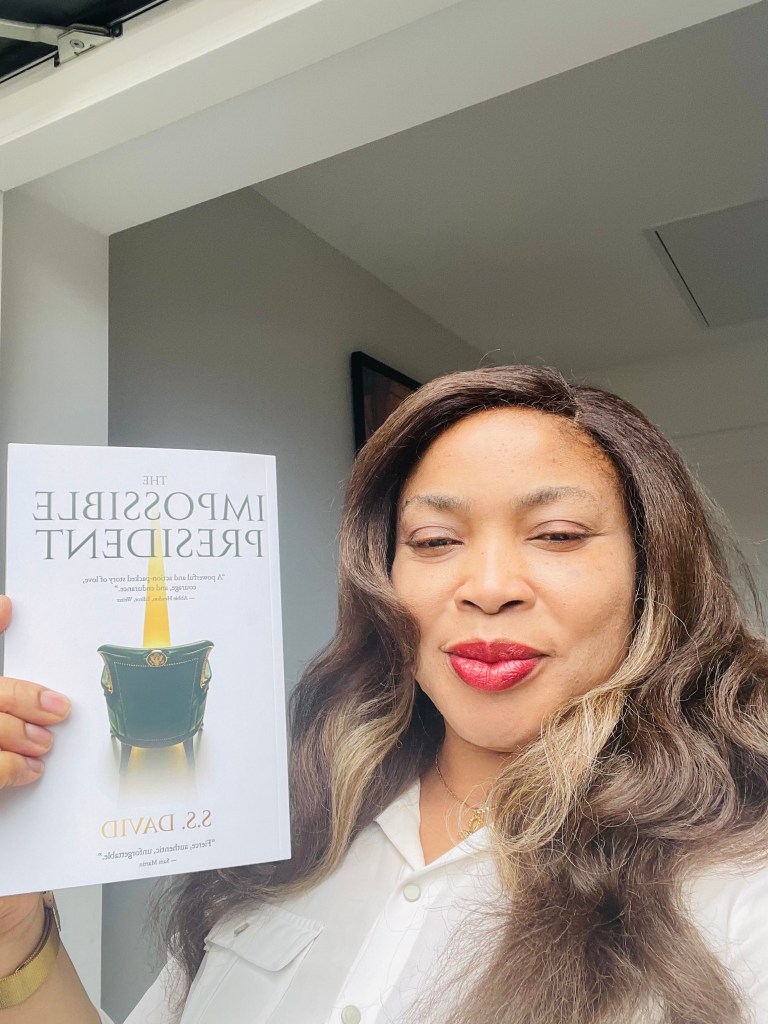
I haven’t posted here for a while, partly because life has been unusually busy. Between work, publishing, and my PhD research, the months seem to have folded into one another and disappeared before I had noticed. Oct 14th was also my birthday, which made me reflective, as birthdays tend to do.
The older I get, the less interested I am in chasing time and the more I value using it well. None of us knows how much time we have left. What matters, I think, is what we choose to do with it; the questions we consider worth asking, the work we commit to, and the things we leave behind when the projects are finished, and the noise has gone, replaced by a poignant silence.
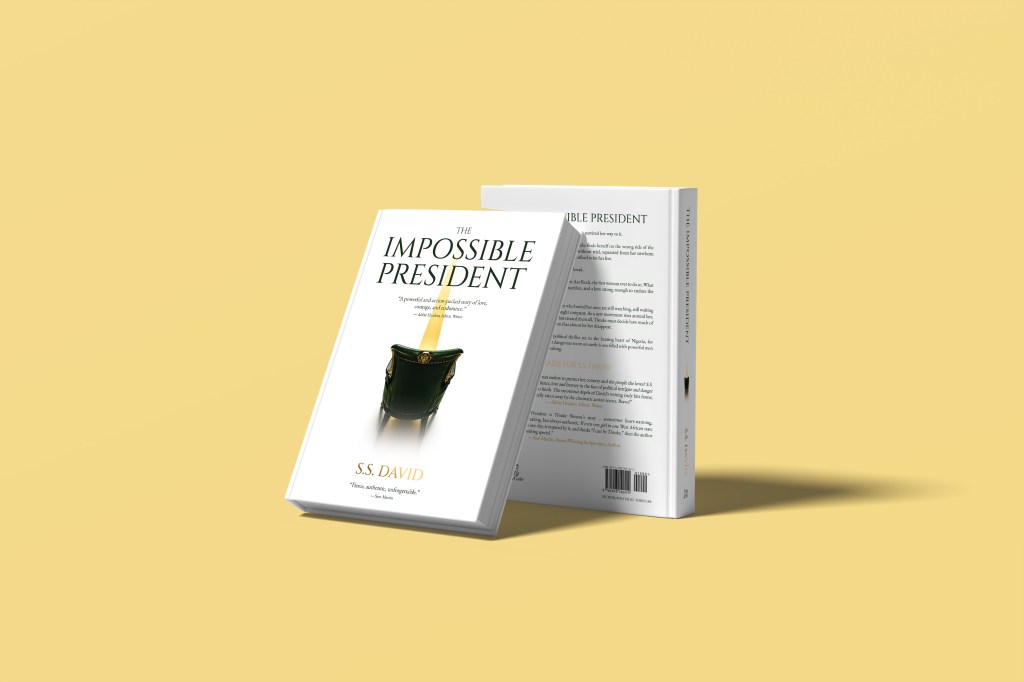
That thought feels especially relevant this week, as Arrow Gate Publishing will release a new edition of The Impossible President on Tuesday 20 October. The novel was first published in Nigeria in 2002 and republished in Abuja in 2004. More than two decades later, it is finally being published for readers in the United Kingdom and internationally.
Yes, I’m writing it twice now. The Impossible President comes out on Tuesday, 20 October. I’m excited, and a little emotional, if I’m honest. Twenty-four years ago, I wrote this book in Nigeria. Next week it will be published in the country where I now live, love, teach and conduct my research. As someone whose life has been shaped by both Nigeria and Britain, I find myself thinking about that journey more than I expected.
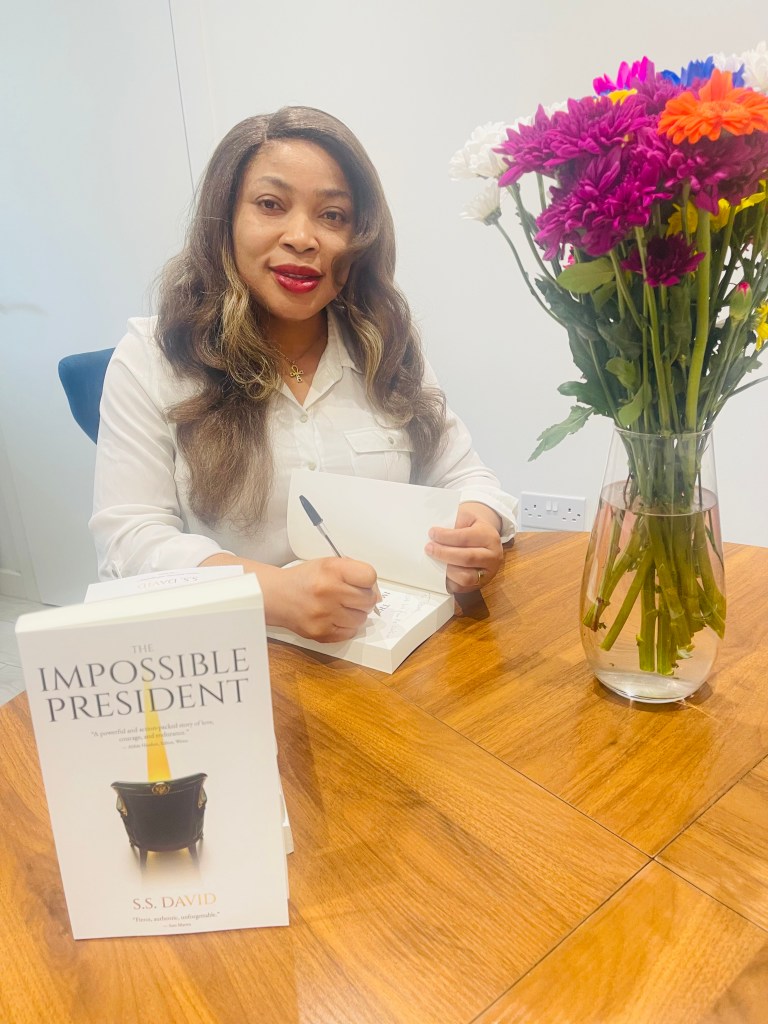
I have lived with this book for a long time. It has a story behind it, and it’s linked to my PhD research. Perhaps that is why seeing it take on a new life feels different from publishing something entirely new. A new book arrives with possibility. An older book returns, carrying its history. It reminds you where you were when you wrote it, what concerned you then, and which questions seemed important enough to spend years on.
The question at the centre of The Impossible President was simple – what would it take for a woman to become president of Nigeria? And I’m not talking about it in theory, or symbolically, or because a speechwriter thought it would make a good campaign slogan.
What would it actually take?
Nigeria celebrated sixty-six years of independence on 1 October. Over those sixty-six years, no woman has served as president or vice president. That fact stayed with me when I first wrote the novel and still does today. I once asked my mum why, and she gave a short laugh and said, “Men are always afraid of a strong woman.” What she said was debatable, but it may have some truth.
This brings me to this year’s Black History Month theme in the United Kingdom: Honouring Our Communities. I have repeatedly returned to the relationship between history and visibility. Communities are not built by famous people alone. They are sustained by countless others whose names seldom appear in public records. Teachers, campaigners, carers, organisers, checkout operators, and community leaders often leave behind profound legacies while receiving very little recognition beyond the circles directly affected by their work.
My doctoral research at London Metropolitan University focuses on women of the ancient Benin Kingdom. I have immersed myself in the stories of women whose economic and cultural influence was significant, and whose presence in historical records is often fragmented or incomplete. The evidence is there, but their stories are frequently overshadowed by the men who occupy centre stage. Research changes how you see things; perspectives are fluid and constantly evolving, and I now see things differently. Once you begin noticing who has been omitted from historical narratives, you begin to notice absences elsewhere too.
Many years ago, I became increasingly aware of accounts of young women from Edo State (Nigeria) being trafficked through routes that led to Italy. At the same time, Chief Mrs Amina Titi Atiku Abubakar and her organisation, WOTCLEF, helped force the issue into Nigeria’s national consciousness. Their work helped create NAPTIP in 2003, giving Nigeria a federal agency dedicated to combating human trafficking. I dedicated The Impossible President to her because I believed then, and still believe now, that some of the most important changes in society happen because individuals decide that something unacceptable can no longer be ignored.
Tinuke, the novel’s protagonist, is not a real person, but she did not emerge from nowhere. She was shaped by the many women whose stories I encountered, by women whose achievements have been documented and by women whose contributions survive only in memory. Like all fictional characters, she is an invention. Unlike many fictional characters, however, she was built from realities that already existed.
What continues to interest me is that the question posed by the novel is not uniquely Nigerian. According to figures published by UN Women and the Inter-Parliamentary Union, only 28 countries in the world are currently led by a woman head of state or government, while more than one hundred have never had one. In Africa, only two countries currently have a woman president. Nigeria is not unusual in waiting for that milestone. It is simply one of many nations still waiting. The United States has never had a woman president either.
For that reason, the novel feels no less relevant now than it did when it first appeared.
Readers approaching The Impossible President as a thriller will find political manoeuvring, betrayals, corruption, violence, ambition and people willing to sacrifice almost anything to retain power. Those elements are certainly there. What interested me most as a writer, however, was the question underneath the plot: who is considered fit to lead, who gets shut out, and what happens when someone refuses to accept those limitations?
Sam Martin described the novel as “fierce, authentic, unforgettable”. Abbie Headon called it “a powerful and action-packed story of love, courage, and endurance”. I am grateful to both of them for reading the book so generously.
I am equally grateful to all of you who have continued to read this blog over the years. Some of you have been here since the early days; I started blogging in 2012, and I have made thousands of friends all around the world. While others arrived more recently. Either way, thank you for staying with me. I’ll visit and read more of your articles whenever I can.
The Impossible President is published on Tuesday, 20 October, by Arrow Gate Publishing. If the questions raised here interest you, I hope you will read it and tell me what you think. If you’re interested in a PDF, a proof copy, or the paperback, please let me know. If you do read it, please leave a review when you can.
You can preorder here: Arrow Gate Stores, Amazon UK, Waterstones, Bookshop.org and wherever books are sold.
Stay safe wherever you are in the world, and much love, always! 🙂


Congratulations Sandra! I can’t wait to read your book. Roll on, 20th October!
Thanks Vanessa! I’m sure you’ll enjoy it. Let me know your thoughts when you do.
Wonderful! Big congrats! ♥️
Thanks Marga!